Culture & Practice

Attentive listening

The guqin opens a conversation between sound, gesture, notation, memory and the quality of our attention.

Performance · Interpretation · Participation

Work
Ting Qin Tu (detail)
Artist
Yu Lan (private collection)
Format
Hanging scroll · colour on silk
Dimensions
88 × 41.7 cm

The instrument

Guqin — More than three millennia of musical memory.

The guqin is a seven-string Chinese zither whose documented history spans more than three millennia.

Its musical tradition is closely connected with Chinese intellectual history, literature, calligraphy, painting and contemplative self-cultivation. Historically cultivated in intimate settings, the guqin asks for close attention to touch, resonance, movement and the life of a sound after it is struck. Guqin music was proclaimed by UNESCO in 2003 and incorporated into its Representative List of Intangible Cultural Heritage in 2008.

This detail from Ting Qin Tu depicts a scholar and female attendants handling and playing the guqin. Its many instruments offer an important visual reference for the study of guqin culture in the Ming and Qing periods, while the arrangement of furniture and objects preserves the atmosphere of a Ming-style literati study. The painting carries both artistic and historical value.

UNESCO · Guqin and its music
Jianzipu · gesture encoded as notation

Reading music

What does it mean to read music?

From notes to gestures: learning Jianzipu changed Yvonne’s understanding of what a musical score could contain.

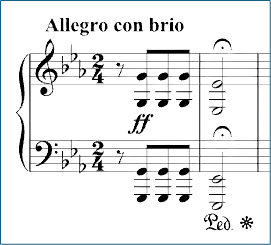
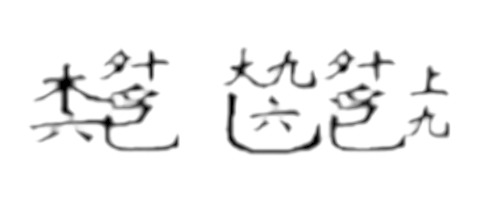
Western staff notation foregrounds the organisation of pitch and time. Jianzipu, the traditional tablature of the guqin, also encodes the physical actions through which a sound is produced: the string, finger, position and playing technique. A Western score often asks what should sound; Jianzipu also asks how the body should create that sound.

Western staff notationDetail of Western staff notation

What sounds?

Pitch, duration, rhythm, dynamics.

Jianzipu · 减字谱Detail of Jianzipu notation

How does the hand move?

String, finger, position, touch, gesture.

Jianzipu · manuscript detail

Dǎpǔ · 打谱

The score is not the whole music.

Historical tablature must sometimes be brought back into sound through study, interpretation and performance.

Historical Jianzipu gives detailed information about how to play, but it does not usually specify rhythm and duration in the same way as a modern Western score. When the continuous performance tradition of an old work has been interrupted, a player studies its tablature, technique, sources and musical logic. This process is known as Dǎpǔ 打谱: reading, reconstructing, interpreting and performing.

Hong Kong Music Office · Guqin notation and Dǎpǔ
Guqin gesture and notation · research diagram

Contemporary enquiry

An ancient notation meets contemporary intelligence.

Jianzipu has also become a subject of computational research.

Researchers are using machine learning and multimodal systems to recognise its compositional signs and support the digitisation of historical guqin manuscripts. Yvonne follows this development with interest as it opens a new conversation between ancient musical knowledge and contemporary technology.

ACL 2026 · Zero-shot Jianzi Recognition
Sound, attention and inner stillness

Attentive practice

Guqin, mindfulness and wellbeing.

Exploring sound as a contemplative practice.

Over years of practising the guqin, Yvonne became increasingly interested in the state of attention created by listening closely to resonance, movement and silence. Her developing work considers how traditional practice may enter into conversation with contemporary ideas of mindfulness, focused attention and wellbeing — inviting audiences to follow a sound from its beginning until even its resonance disappears.

Wellbeing language on this site describes an artistic enquiry. It does not present guqin practice as medical treatment or clinical therapy.